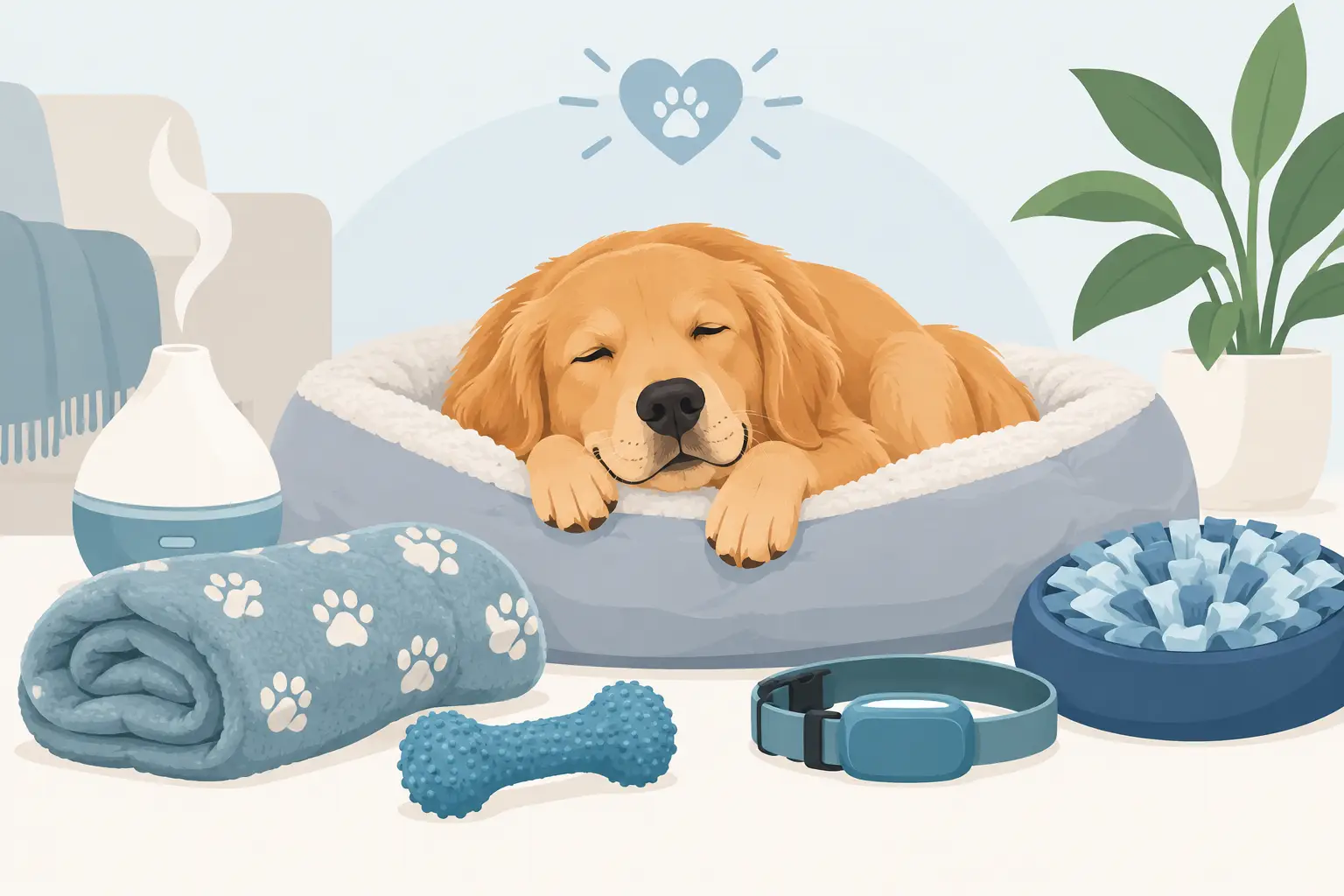
A thunderstorm starts, the delivery truck pulls up, or you reach for your keys - and your dog is suddenly pacing, panting, barking, or glued to your side. The best calming dog products can make those unsettled moments feel more manageable, but the right choice depends on what is causing your pup's stress in the first place.
Some dogs need a cozy retreat from a noisy household. Others do best with a little extra comfort during car rides, grooming appointments, visitors, or fireworks. Rather than looking for one magic fix, think of calming products as part of a gentle comfort plan: a safe space, predictable routines, and tools that suit your dog's personality.
Start With Your Dog's Stress Signals
A worried dog does not always look the same as a scared dog. One may hide under the table. Another may chew furniture, shed heavily, lick their paws, whine, pull on the leash, or become extra energetic when guests arrive. Watching the pattern helps you choose products with a real purpose instead of filling the cart with items your dog may ignore.
Consider when the behavior happens and how intense it is. If your dog only struggles during occasional storms, a pressure wrap, lick mat, or quiet bed may be enough. If they show ongoing fear, panic, aggression, appetite changes, or destructive behavior, speak with your veterinarian. Calming products can provide support, but they are not a replacement for veterinary care or a behavior plan when anxiety is severe.
Age, size, health conditions, and daily routine matter too. A senior dog may appreciate a plush orthopedic bed, while a busy young dog may settle better after an enrichment activity that gives their brain something rewarding to do.
Best Calming Dog Products for Different Needs
1. Calming beds and cozy blankets
A soft, supportive bed gives many dogs a predictable place to rest when the house feels busy. Look for raised sides or a gently enclosed shape if your dog enjoys curling up and leaning against something. Washable fabrics are especially useful for puppies, seniors, and dogs who track in mud after a backyard zoomie session.
A calming bed is not the best fit for every pet. Some dogs run warm or prefer to stretch out flat, so a breathable mattress-style bed may be more appealing than a deep, fluffy nest. Adding a familiar blanket can make any sleep spot feel more like home. Choose one that is soft enough for snuggling but sturdy enough for regular washing.
2. Pressure wraps for storms and travel
A properly fitted calming wrap applies gentle, steady pressure around the torso. Some dogs find that snug sensation reassuring during fireworks, thunderstorms, car rides, or a noisy family gathering. It can be a simple, non-medicated option for short events that you can anticipate.
Fit is everything. The wrap should be secure without restricting movement, breathing, or bathroom breaks. Let your dog try it on during a calm moment first, paired with praise or treats, rather than introducing it when they are already frightened. If your dog freezes, struggles, overheats, or seems more distressed in a wrap, take it off and try another comfort option.
3. Calming chews and supplements
Chews are convenient for dogs who need support before a known trigger, such as boarding, holiday visitors, or a long road trip. Formulas vary widely and may include ingredients such as L-theanine, chamomile, colostrum, or other calming compounds. What works for one dog may do very little for another, so set realistic expectations.
Read the label closely, follow dosing guidance for your dog's weight, and introduce only one new supplement at a time. Ask your veterinarian before using calming supplements if your dog takes medication, is pregnant, has a medical condition, or has a sensitive stomach. Avoid combining multiple calming formulas without professional guidance. More is not necessarily better.
4. Lick mats and treat-dispensing toys
Licking and problem-solving can help redirect a dog's attention toward a positive activity. Spread a dog-safe soft treat on a lick mat, or offer a treat-dispensing toy before a stressful event begins. These products are especially handy when someone is coming to the door, during quiet crate time, or while you are settling in for a grooming session.
Use treats that fit your dog's diet, and supervise when needed. A strong chewer may damage a lightweight toy or try to swallow pieces. For many dogs, the goal is not to keep them busy for hours. A few calm, focused minutes can create a helpful transition from excitement to rest.
5. Snuffle mats and scent-based enrichment
Dogs experience the world through their noses, and sniffing is meaningful work. Snuffle mats let you hide kibble or small treats among fabric folds so your dog can search at a relaxed pace. They are a lovely indoor option for rainy days, limited-mobility pets, or dogs who need a little decompression after a busy walk.
Choose a mat with secure construction and supervise your dog until you know how they use it. If they shred fabric rather than forage, switch to a sturdier puzzle toy. Enrichment should feel fun, never frustrating.
6. Crate covers and quiet-space essentials
For dogs already comfortable in a crate, a breathable cover can reduce visual distractions and help create a quieter den-like area. Pair it with a comfortable crate mat, a favorite toy, and a consistent rest routine. This setup can be useful during dinner parties, holiday activity, or the afternoon rush when everyone is coming and going.
Do not cover a crate so completely that airflow is limited, especially in warm rooms. And never use a crate as punishment. A calming space works only when your dog sees it as safe, familiar, and voluntary.
7. White noise and gentle sound machines
Sudden sounds can be tougher on dogs than steady background noise. A fan, white-noise machine, or calm music can soften the impact of street traffic, hallway chatter, or fireworks in the distance. This is a low-effort tool that works nicely alongside a bed or crate setup.
Keep the volume modest. The purpose is to mask startling noise, not to fill the room with another source of stimulation. Try it on an ordinary day first and see whether your dog relaxes, naps, or simply walks away.
8. Pheromone products
Pheromone diffusers, sprays, and collars are designed to mimic comforting signals associated with canine security. They can be useful for dogs who get unsettled in a particular room, during travel, or after a move. Because they are subtle, results may take time and can vary from dog to dog.
Use them as directed and give your dog other supports too, such as a familiar bed, consistent feeding times, and a calm place to retreat. A pheromone product is often easier to judge over several days than during one high-stress event.
9. Comfortable harnesses for confidence-building walks
A well-fitted harness does more than look polished on a neighborhood walk. It can help you guide your dog comfortably without putting pressure on their neck, which may make outings feel more secure for dogs who are easily startled. Pair it with patient, reward-based training and quieter walking routes when your dog is working through fear.
Avoid assuming a harness alone will solve reactivity or anxiety. The right fit supports safer handling, while slow exposure and positive experiences build lasting confidence. Check for rubbing around the chest and underarms, especially on fluffy coats and small breeds.
10. Familiar apparel for chilly or uncertain moments
Some dogs genuinely enjoy the close, cozy feel of a soft sweater or pajama set, particularly in cool homes or on brisk morning walks. For fashion-loving pups, comfort and style can happily share the same outfit. A familiar garment may also offer a little routine before travel or settling down for the night.
Keep apparel simple and comfortable. It should not pull at the legs, bunch around the neck, or limit normal movement. If your dog spends the whole time trying to wriggle free, save the adorable look for a quick photo and choose a different calming tool.
Make the Product Part of a Calmer Routine
The most effective calming setup is usually consistent, not complicated. Offer your dog's cozy bed in the same quiet corner, bring out the lick mat before visitors arrive, and practice wearing the harness or wrap when nothing stressful is happening. This helps the product become a familiar cue for comfort instead of a sign that something scary is about to happen.
At Sootha Paws, gentle care can still have plenty of personality. A supportive bed, a practical training tool, and a favorite sweater can all earn a place in your dog's everyday routine when they are chosen with comfort in mind.
Watch for small wins: a dog who chooses their bed instead of pacing, settles faster after the doorbell, or takes a treat during a thunderstorm. Those little signs tell you that you are building a happier, safer rhythm together - one calm moment at a time.
