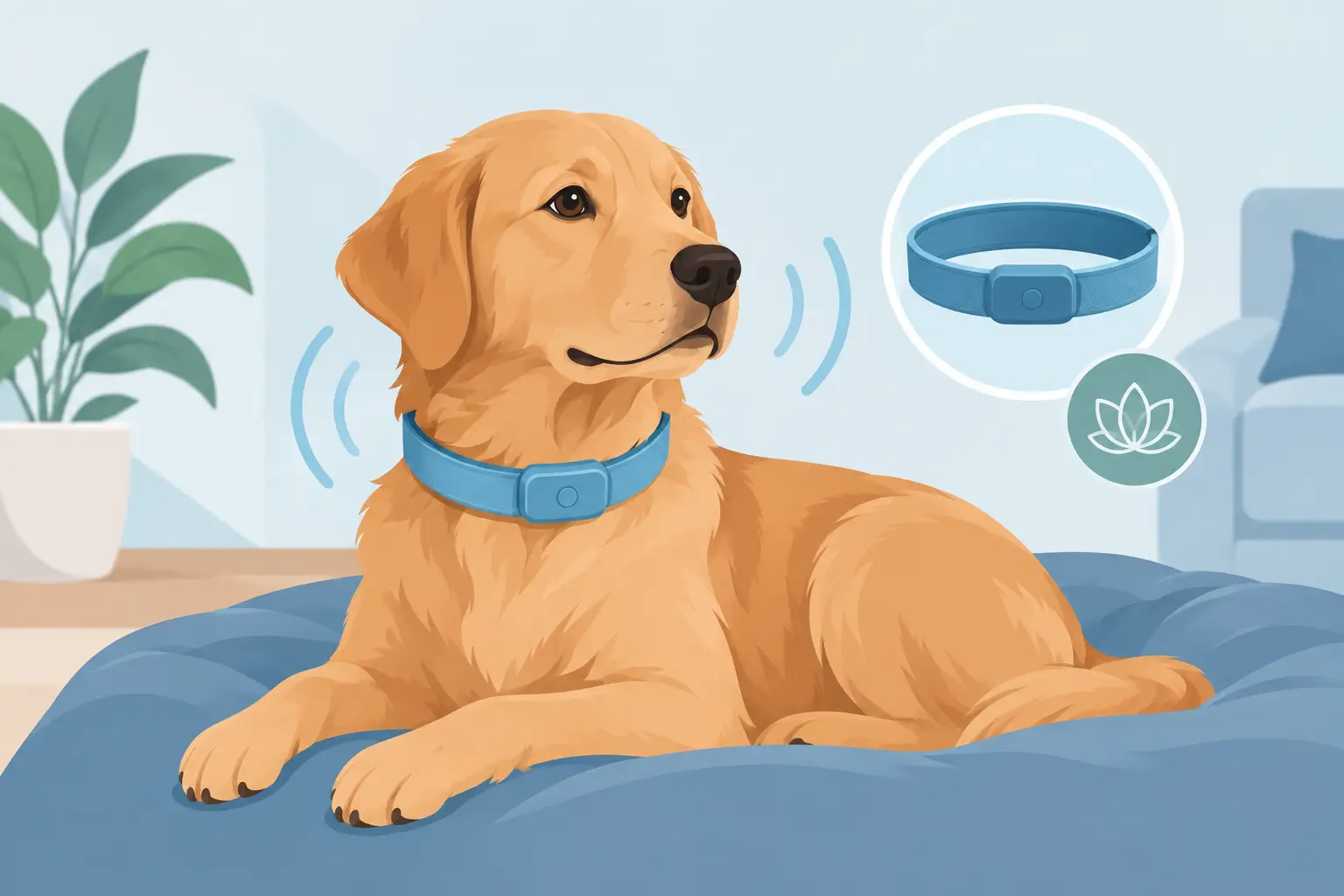
A dog who paces when the doorbell rings, trembles during thunderstorms, or turns every car ride into a stressful event deserves more than a quick fix. So, do dog calming collars work? For some dogs, they can take the edge off mild, situational stress. For others, the collar makes little difference, especially when anxiety is intense or has become a daily pattern.
The most helpful way to view a calming collar is as one piece of a comfort plan. It may support a calmer routine, but it cannot replace patient training, a safe environment, or veterinary care when your dog needs more help. Gentle Care for Happy Tails means choosing support that suits your individual pup, not expecting one product to solve every worried moment.
How dog calming collars are meant to work
Most calming collars use dog-appeasing pheromones, often called DAP. These are synthetic versions of scent signals associated with a mother dog and her nursing puppies. The idea is not that the collar sedates your dog. Instead, the scent is designed to send a familiar, reassuring cue while your dog wears it.
Some collars use ingredients such as lavender, chamomile, or other botanical scents. These products are different from pheromone collars, and their effects can be less predictable. Dogs experience the world through scent, but a fragrance that feels pleasant to us is not automatically calming to every dog. Strong smells can even be irritating for sensitive pups.
You may also see pressure-based calming wraps described alongside collars. They are not the same product or mechanism. A snug wrap applies gentle, steady pressure to the body, while a pheromone collar releases scent around the dog’s head and neck. Both may help certain dogs, but neither works equally well for every fear or behavior.
Do dog calming collars work in real life?
The honest answer is: sometimes. Research on dog-appeasing pheromones suggests they may help some dogs with mild stress-related behaviors, particularly during predictable changes such as travel, visitors, new routines, or time in a kennel. Many pet parents notice a dog settles a little faster, barks less, or seems less clingy when the collar is part of a broader routine.
That improvement can be meaningful. If your dog is normally uneasy when guests arrive but can relax on a cozy bed with a chew after a few minutes, a calming collar may be a worthwhile extra layer of support. The goal is not to make your dog unusually quiet or sleepy. It is to help them stay below their stress threshold so they can cope and learn.
Results vary because anxiety has many causes. A dog worried by a noisy delivery truck may respond differently than one with separation distress, pain, past trauma, or fear of unfamiliar dogs. Breed, age, health, training history, and the environment all play a part. A collar that seems wonderful for one friend’s pup may do very little for yours.
When a collar may be worth trying
Calming collars tend to make the most sense for mild or occasional stress, especially when you can anticipate the trigger. Think of a move to a new home, holiday gatherings, a boarding stay, a grooming appointment, or the first weeks after adoption. They can also be convenient because the dog wears the support throughout the day rather than only during a single event.
Use the collar before the stressful situation when possible. A dog who is already panicking may need more than a scent-based aid can provide in that moment. Give the product enough time according to its instructions, then watch for small, practical changes: easier settling, fewer startled reactions, or a quicker return to normal after a trigger passes.
When a collar is unlikely to be enough
A calming collar should not be your only plan if your dog is injuring themselves in a crate, escaping, refusing food, having accidents from distress, growling or biting from fear, or panicking whenever left alone. Those signs call for a conversation with your veterinarian. Sudden anxiety in a previously relaxed dog also deserves a health check, because pain, hearing changes, cognitive changes, and other medical issues can affect behavior.
Severe separation anxiety is a common example. A collar might be a comforting addition, but it will not teach a dog that alone time is safe. A tailored behavior plan, gradual training, and sometimes veterinary treatment are often needed. There is no shame in getting that support. Your dog is communicating that they are having a hard time.
How to choose a calming collar safely
Start with the type of support you want. A pheromone collar is generally the most straightforward choice for a dog who needs everyday reassurance in a new or mildly stressful situation. Check the package for the dog’s recommended neck size, how long the collar lasts, and whether it activates with body warmth.
Fit matters. You should be able to slide two fingers comfortably between the collar and your dog’s neck. Trim off excess length only if the manufacturer says it is safe to do so. Check the fit regularly for growing puppies, fluffy coats, and dogs who wear a harness or regular collar as well.
Avoid treating any calming collar like a fashion accessory that can stay on forever without inspection. Look at your dog’s neck every day at first for redness, itching, hair loss, or rubbing. Remove the collar if you notice skin irritation, unusual scratching, coughing, or any change that concerns you. A comfortable dog can still look cute in their favorite sweater or bow, but comfort always comes first.
If you choose a botanical formula, read the label carefully. Never add essential oils directly to a collar or your dog’s fur unless a veterinarian specifically advises it. Concentrated oils and heavily scented products can be unsafe or unpleasant for pets, particularly if they are ingested or used around cats.
Make the collar part of a calmer routine
The best results usually come from pairing a calming collar with changes that make life feel more predictable. Give your dog a quiet retreat with a supportive bed, fresh water, and a familiar blanket. During visitors or loud events, let them choose that space rather than insisting they greet everyone.
For predictable triggers, prepare before the trigger starts. Close curtains before fireworks, play gentle background sound, offer a long-lasting food puzzle if your dog can eat while nervous, and keep your own movements relaxed. For car worries, begin with short, low-pressure sessions: sit in the parked car, reward calm behavior, then build gradually toward brief rides.
Training should focus on helping your dog form a better association, not forcing them to “get used to” something frightening. Reward the small moments you want more of: looking at a trigger calmly, turning back to you, settling on a mat, or choosing to walk away. If your dog cannot take treats, is frozen, or is trying to flee, the situation is probably too hard. Create more distance and make the next practice easier.
A simple way to tell whether it helps
Before putting on the collar, choose one or two behaviors to track for a couple of weeks. For example, note how long your dog barks after you leave, how quickly they settle after the doorbell, or whether they can rest during a storm. Keep the rest of the routine as consistent as you reasonably can.
Look for a pattern, not a perfect day. If your dog is noticeably more comfortable and has no skin issues, the collar may be earning its place in your care routine. If nothing changes after the recommended trial period, it is okay to move on. You have not failed your dog, and neither have they.
Common questions about dog calming collars
Can my dog wear a calming collar all the time?
Follow the product directions. Many pheromone collars are designed for continuous wear for a set number of days, but they still need regular fit and skin checks. Remove the collar for bathing or swimming if the instructions say water may reduce its effectiveness.
Will a calming collar make my dog sleepy?
A pheromone collar is not intended to sedate your dog. Your pup may appear more relaxed if it helps, but unusual lethargy is not the goal. Contact your veterinarian if your dog seems unwell or dramatically different.
Can puppies use calming collars?
Some collars are made for puppies, while others have age or weight limits. Always check the label, supervise a puppy with any collar, and make sure the fit stays safe as they grow.
A calming collar can be a kind, low-effort option for the dog who needs a little extra reassurance, especially alongside a peaceful space, patient practice, and plenty of affection. Pay attention to the dog in front of you: their comfort, their signals, and the small wins that help their tail wag a little easier.
