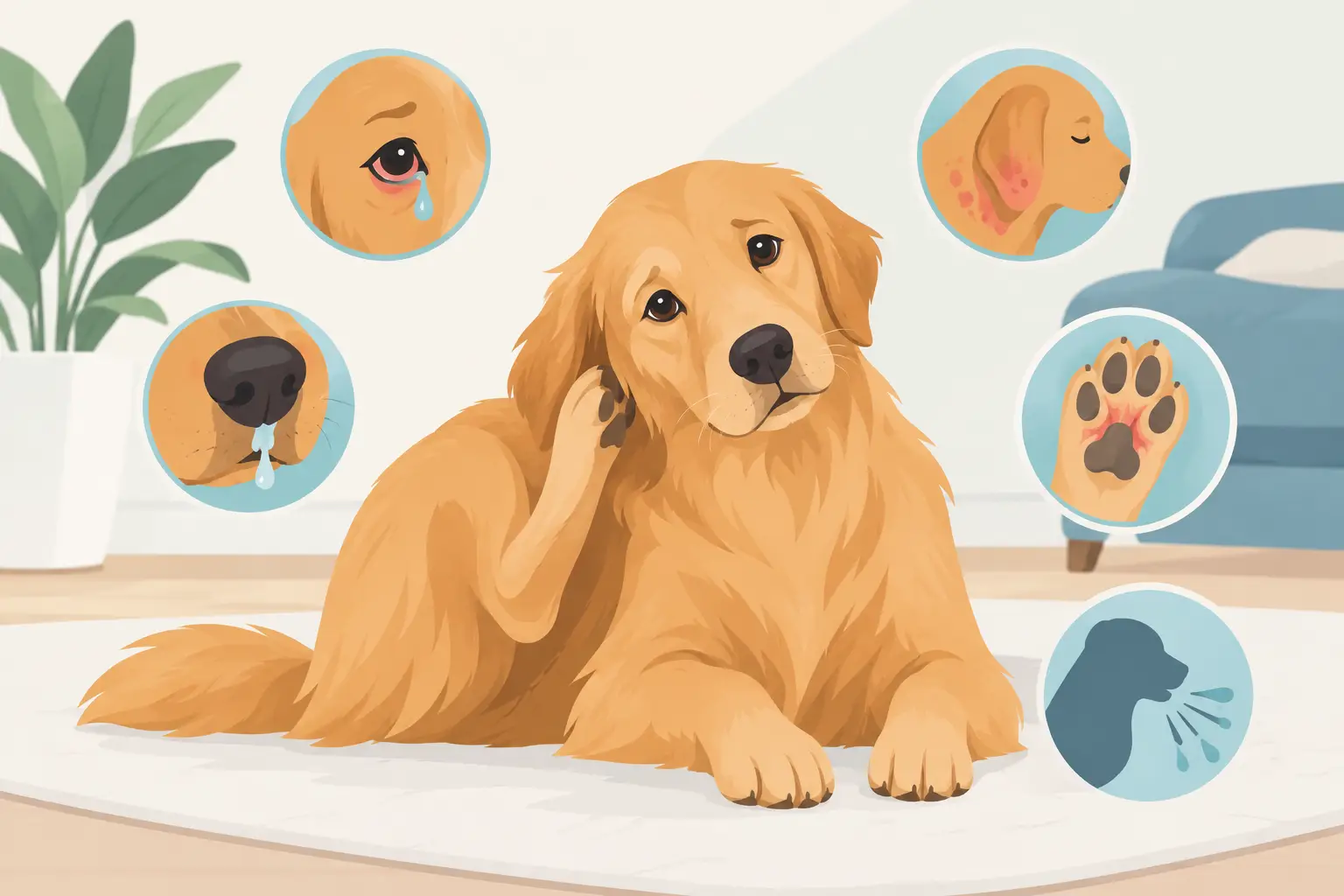
When your dog cannot stop scratching after a walk, keeps shaking their head, or starts leaving little red bumps behind their collar, it is tempting to blame the newest shampoo or treat. Dog allergy symptoms are often more complicated than one obvious cause. They can build over time, come and go with the seasons, or look surprisingly similar to fleas, dry skin, infections, and other health concerns.
A little extra scratching does not always mean an allergy. But a pattern of discomfort is worth noticing. Your dog depends on you to spot the small changes, get the right veterinary guidance, and make daily life feel gentle and comfortable again.
Common Dog Allergy Symptoms to Watch For
Most dogs with allergies show their discomfort through their skin and ears. Instead of sneezing the way people often do, dogs are more likely to itch, lick, chew, rub, or develop irritated skin. The paws, face, ears, belly, underarms, and groin are common trouble spots because these areas are sensitive and easily exposed to allergens.
Look for ongoing scratching, frequent paw licking, chewing at legs or hips, rubbing the face on furniture or carpet, red skin, small bumps, scabs, thinning fur, or hot spots. A hot spot is a painful, inflamed patch that can appear quickly after persistent licking or scratching. It needs attention before it becomes larger or infected.
Ear changes can be another major clue. Your dog may shake their head, scratch at an ear, have redness inside the ear flap, develop a noticeable odor, or seem tender when you touch the area. Allergies can create inflammation that makes ear infections more likely, so recurring ear trouble should never be treated as just a grooming issue.
Some dogs also have digestive signs, especially when a food sensitivity or food allergy is involved. Vomiting, loose stool, diarrhea, frequent bowel movements, gas, or ongoing stomach upset can happen. These signs alone do not prove a food allergy, but they are useful details to share with your veterinarian.
Less commonly, dogs may sneeze, have watery eyes, or develop a runny nose. Respiratory signs deserve special care, particularly if your dog has trouble breathing, facial swelling, sudden hives, weakness, or repeated vomiting. Those can be signs of a severe allergic reaction and call for urgent veterinary help.
What Can Trigger Allergies in Dogs?
The word allergy covers several different situations. Finding the trigger can take patience, and the answer is not always the first thing you suspect.
Environmental allergies are very common. Pollen from grass, trees, and weeds can cause seasonal flare-ups, while dust mites, mold, and household dander may cause symptoms year-round. A dog who gets itchy every spring or licks their paws after being outside may be reacting to something in their environment. Weather and location can affect the pattern, too.
Flea allergy dermatitis is another frequent cause of intense itching. A dog with this sensitivity can react strongly to even one flea bite. You may not see a flea every time you look, especially if your dog has been grooming constantly. Itching around the tail base, lower back, and rear legs can be a helpful clue, but only a veterinarian can confirm what is going on.
Food allergies are less common than many pet parents assume, but they do happen. They usually involve a reaction to a protein or other ingredient your dog has eaten before, not necessarily a brand-new food. Skin irritation, recurrent ear infections, and digestive upset may occur together. Switching foods repeatedly on your own can make the picture harder to understand, so ask your veterinarian before starting a major diet change.
Dogs can also react to contact irritants. A new detergent, scented floor cleaner, lawn product, fabric spray, shampoo, or material in a collar or harness may bother sensitive skin. The timing matters. If redness shows up where a product touches the body or begins soon after a household change, make a note of it.
Allergies or Something Else?
An itchy dog is not automatically an allergic dog. Fleas, mites, bacterial or yeast infections, ringworm, dry skin, anxiety-related licking, hormonal conditions, and pain can all lead to scratching or chewing. Ear infections can also cause head shaking even when allergies are not the original problem.
That is why a quick internet diagnosis can lead to the wrong fix. An anti-itch product may soothe the surface while the actual cause continues underneath. On the other hand, a simple change in flea prevention, grooming routine, or bedding care may be exactly what your dog needs. It depends on the pattern, the trigger, and whether an infection has developed.
Take clear photos of rashes, hot spots, or swollen areas before they change. Note when symptoms started, whether they are seasonal, where your dog itches most, what foods and treats they eat, and any new products used in your home. Those details can help your veterinary team move more quickly toward an answer.
When to Call the Veterinarian
Make a veterinary appointment if your dog is itchy for more than a few days, has recurring ear issues, develops skin sores, loses fur, or has vomiting or diarrhea that does not settle quickly. Earlier care can prevent a small irritation from turning into a painful skin or ear infection.
Seek urgent veterinary care for trouble breathing, swelling of the face or muzzle, widespread hives, collapse, pale gums, severe vomiting, or sudden weakness. These signs can indicate a serious reaction and should not wait for a routine appointment.
Your veterinarian may check for fleas and skin infections, examine the ears, discuss diet history, or recommend testing based on your dog’s symptoms. For suspected food allergies, a carefully supervised elimination diet is often more useful than a single ingredient swap. It takes commitment, but it can provide much clearer answers.
Helping an Itchy Dog Feel More Comfortable at Home
While you wait for veterinary advice or follow a treatment plan, keep your dog’s routine simple and soothing. Wipe paws and legs with a clean, damp cloth after outdoor time if environmental allergens are suspected. Wash bedding regularly with a fragrance-free detergent, vacuum soft surfaces, and keep up with veterinarian-recommended flea prevention.
Avoid adding several new products at once. A scented spray, new shampoo, richer treats, and a different laundry detergent all introduced in the same week can make it difficult to spot what is helping or hurting. Choose gentle grooming products made for dogs, and rinse shampoo thoroughly so residue does not linger on the skin.
Keep nails trimmed as well. Dogs who scratch with sharp nails can break the skin quickly, which raises the chance of infection. If your pup wears clothing, collars, or a harness, check that the fit is comfortable and that fabric is clean and dry. Soft, breathable materials are usually kinder to irritated skin than anything tight, rough, or heavily fragranced.
Do not give human allergy medicine, creams, essential oils, or leftover prescriptions unless your veterinarian tells you exactly what to use and how much. Some products that seem harmless in a medicine cabinet can be unsafe for dogs, especially when licked.
Comfort Is Part of Care
Allergy management is rarely a one-time fix. Your dog may need a seasonal routine, consistent flea control, a veterinary diet trial, medication, or a combination of strategies. The goal is not simply to stop scratching for a day. It is to help your pup sleep comfortably, play happily, and enjoy the soft blankets, sunny walks, and cuddles that make a dog’s life so good.
Pay attention to the pattern, trust your observations, and ask for help early. Gentle care for happy tails starts with noticing when your best friend is trying to tell you they are uncomfortable.
