A leash clip may look like a small detail, but it can completely change the feel of a walk. In the front versus back harness decision, the right choice depends less on what looks cutest and more on how your dog moves, pulls, and responds to guidance. A comfy harness should help your pup feel secure while helping you enjoy more relaxed, happy-tail outings together.
A front-clip harness and a back-clip harness both have a place in a dog's wardrobe. Some dogs do beautifully in one style for every neighborhood stroll. Others benefit from switching harnesses for training walks, busy sidewalks, hiking, or easygoing sniff breaks. Here is how to choose with your dog's comfort and personality in mind.
Front Versus Back Harness: The Main Difference
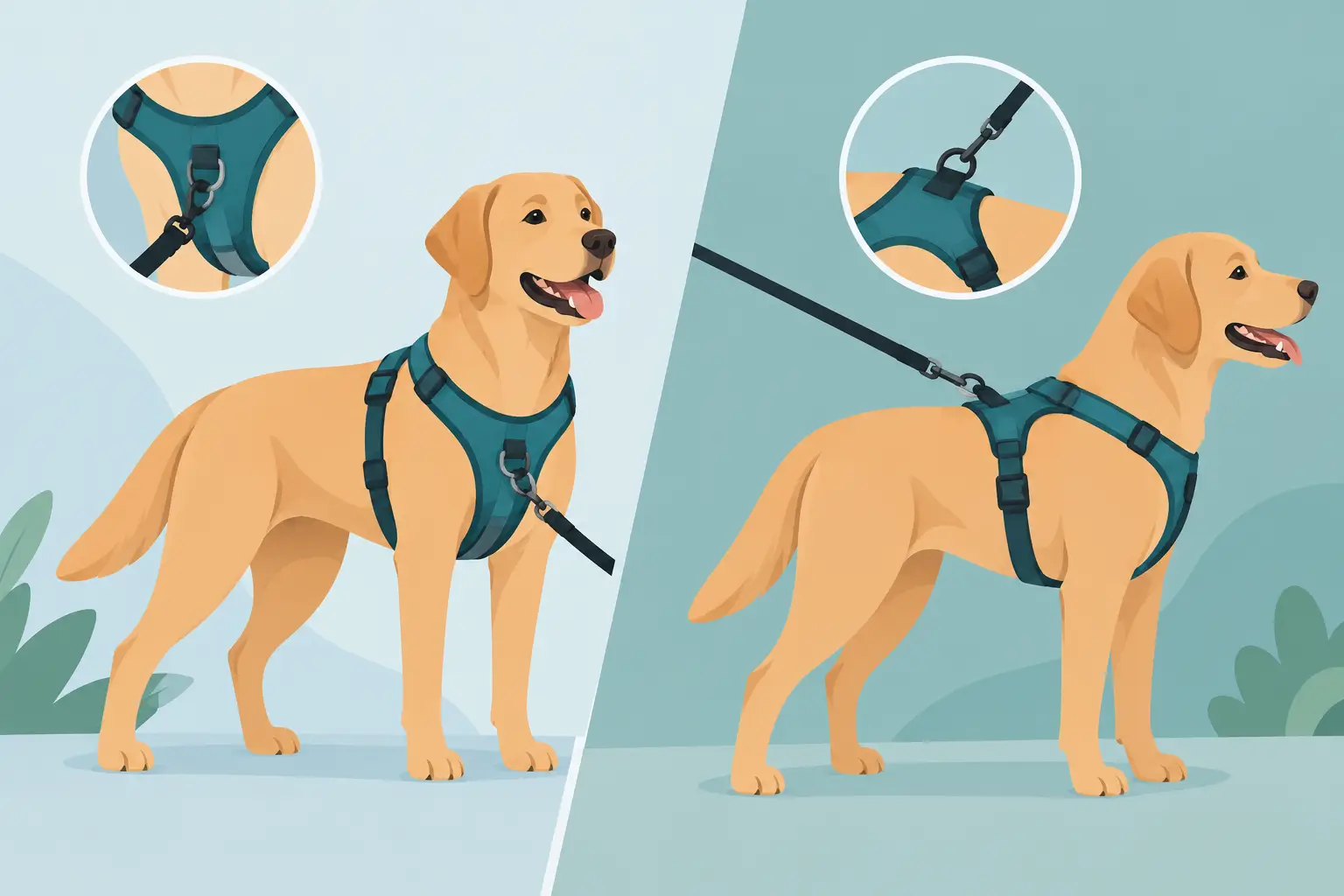
The difference is exactly where the leash attaches. A front-clip harness has a ring at the center of the chest. A back-clip harness has a ring between the shoulder blades, usually on the upper back.
That placement changes where leash pressure guides your dog. When a dog pulls in a front-clip harness, the leash gently turns their chest back toward you. It does not make pulling impossible, but it can reduce the straight-ahead momentum that turns a walk into a tug-of-war.
With a back-clip harness, leash pressure comes from behind. This feels natural to many dogs and gives them room to move forward comfortably. It is often an easy, friendly choice for dogs that already walk politely or for lower-pressure activities where a little extra freedom is welcome.
Neither option is automatically better. The best harness is the one that fits correctly, keeps pressure off sensitive areas, and matches the moment you are sharing with your dog.
When a Front-Clip Harness Makes Sense
A front-clip style is often a helpful tool for dogs who pull hard toward squirrels, other dogs, exciting smells, or the next block. Because the leash attaches at the chest, a strong pull redirects the dog's body to the side instead of letting them drive straight ahead.
This can make walks more manageable for pet parents without relying on sharp corrections or putting pressure around a dog's neck. It is especially useful during loose-leash training, when you are teaching your dog that a relaxed leash keeps the walk moving forward.
Front-clip harnesses may be a good fit for a newly adopted dog whose walking habits you are still learning. They can also help larger, enthusiastic dogs who have the strength to pull a person off balance. For puppies, a lightweight, properly fitted version can offer gentle guidance while they practice good leash manners.
Still, this style is not a shortcut for training. Your dog will learn fastest when the harness is paired with patience: reward them when the leash is loose, pause when they surge ahead, and keep sessions short enough that everyone stays in a good mood. A front clip helps create better opportunities to practice, but consistency is what builds the habit.
Some dogs find that chest-guided movement awkward at first. If your pup twists, rubs, or seems frustrated, check the fit before assuming the style is wrong. A harness that sits too low, slides sideways, or tightens across the shoulders can make any walk less comfortable.
When a Back-Clip Harness Is the Better Choice
Back-clip harnesses are popular for good reason. They are simple to put on, comfortable for many dogs, and well suited to dogs that do not regularly pull. For an easygoing companion who walks beside you, a back clip often provides the freedom and natural movement they need for a pleasant daily outing.
This style can be especially nice for small dogs, senior dogs, and dogs that dislike pressure across the front of their chest. It is also a practical choice for casual bathroom breaks, car-to-door transitions, and relaxed adventures where training is not the main goal.
A back-clip harness is not always ideal for a powerful puller. Because it allows forward movement, some dogs lean into the pressure and pull even more. That does not mean you have done anything wrong. It simply means the harness is not providing enough directional support for that particular dog in that particular setting.
Think about a calm walk through a quiet neighborhood versus a Saturday morning at a busy park. Your dog may be perfectly polite with a back clip on the first walk and much more excited on the second. Gear can be matched to the challenge rather than treated as a one-style rule.
Comfort and Fit Matter More Than Clip Placement
A fashionable harness can absolutely show off your dog's personality, especially when it pairs beautifully with a favorite tee, bow, or cozy sweater. But the first job of every harness is comfort. Even the most charming color or print should take a back seat to a safe, comfortable fit.
Look for a harness that rests comfortably around the chest and rib cage without pressing into the throat. You should generally be able to slide two fingers under the straps, though very tiny dogs may need a slightly more tailored check. It should feel snug enough that your dog cannot back out of it, but never restrictive.
Watch how your dog walks in it. Their shoulders should move freely, and the harness should not rub under the front legs or creep upward toward the neck. After a few walks, check for flattened fur, redness, or sensitive spots. These can be signs that adjustment or a different shape is needed.
Measure your dog according to the product sizing guide rather than choosing based on breed alone. Two dogs of the same breed can have very different chests, necks, and body lengths. If your dog is between sizes, the better option depends on the harness design and how much adjustment it offers. A secure fit around the chest is usually more useful than a loose fit chosen for extra room.
Consider Your Dog's Walking Personality
The front versus back harness choice becomes easier when you think about behavior instead of labels. A dog who is calm indoors may become a determined puller outdoors. A rescue dog may need more guidance at first and less as confidence and training grow.
Choose a front clip if your main challenge is pulling, lunging, or staying connected in distracting places. Choose a back clip if your dog walks nicely, needs a simple everyday option, or enjoys low-key outings with plenty of room to sniff.
For dogs with special health concerns, past injuries, or unusual movement, ask your veterinarian or a qualified trainer for individual guidance. A harness is gentler than attaching a leash to a collar for many dogs, but the right shape and handling approach still matter.
You can also keep more than one harness on hand. A structured front-clip harness for training walks and a soft back-clip harness for quick errands can make daily life easier. It is a little like choosing sneakers for a long walk and slippers for relaxing at home: both are useful, just for different jobs.
Make Every Walk Feel Better
Whichever clip placement you choose, introduce the harness with treats, praise, and a calm voice. Let your dog sniff it first, then reward them for stepping in or allowing it to be gently fastened. A positive start helps the harness become a happy signal that an adventure is about to begin.
Check the straps regularly, especially for growing puppies and dogs whose weight or coat changes through the seasons. Keep the leash light enough for your dog's size, and give them time to sniff and explore when it is safe to do so. Walks are not only about getting from one place to another - they are part exercise, part enrichment, and part special time with you.
The right harness should leave your dog comfortable, confident, and ready for the next outing. Choose the clip that supports your current walking needs, keep training gentle, and let your pup's relaxed tail and easy stride tell you when you have found a good match.
