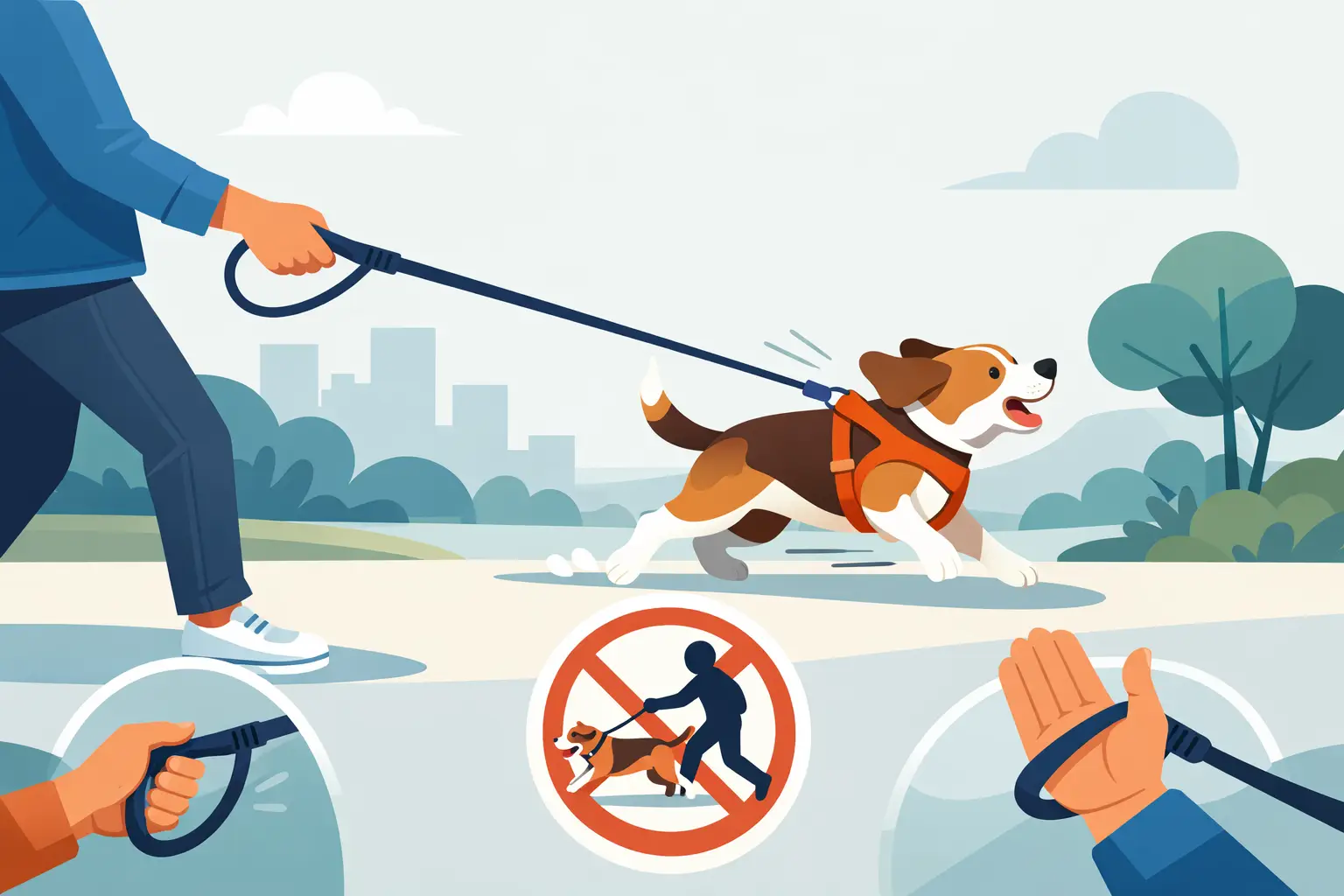
That tight leash, quickened pace, and familiar feeling of being pulled down the sidewalk can take the joy out of time with your best friend. Learning how to stop dog pulling is not about winning a battle or forcing your dog into position. It is about teaching them that staying near you is comfortable, rewarding, and the fastest way to keep moving toward all the interesting things ahead.
Dogs pull because walks are exciting. There are scents to investigate, people to greet, squirrels to watch, and an entire neighborhood that seems to call their name. With a few gentle adjustments and consistent practice, even enthusiastic walkers can learn calmer leash manners.
Why dogs pull in the first place
Most dogs are not trying to be difficult. Pulling works. If your dog leans into the leash and reaches the grass, greeting, or smell they wanted, they learn that pulling gets them there. This can happen quickly, especially when a dog is young, energetic, or new to leash training.
Some dogs also pull because they are overwhelmed, worried, or under-exercised. A busy street, another dog approaching, or the thrill of leaving the house can make it harder for them to think clearly. Before focusing only on training, consider the whole picture: your dog's age, energy level, health, environment, and past walking experience all matter.
A senior dog who suddenly begins pulling, a usually calm dog who seems distressed, or a dog that coughs, limps, or struggles to breathe on walks should be checked by a veterinarian. Training is most effective when your pup feels well.
Start with the right walking setup
The best training plan is easier when your gear is comfortable and properly fitted. A well-fitting harness can help distribute pressure more gently than a collar, particularly for small dogs, flat-faced breeds, or dogs with delicate necks. Many pet parents prefer a front-clip harness because it can turn a dog slightly back toward the handler when they surge forward, rather than allowing them to lean their full weight into the pull.
No tool trains a dog by itself, though. Think of a harness as support, not a shortcut. Avoid equipment designed to cause pain, fear, or sharp corrections. Your dog should be able to breathe, move their shoulders, and enjoy their walk while learning a new habit.
Use a standard leash that gives enough room for a natural walk without allowing your dog to build momentum. Retractable leashes can make early training harder because they often teach dogs that steady pressure means more distance and freedom. Save extra-long leashes for safe sniffing sessions in open, low-traffic spaces once your dog understands the basics.
Bring small, high-value treats that your dog truly loves. Soft bites of chicken, cheese, or a favorite training treat often work better outdoors than everyday kibble. You are competing with a world full of wonderful smells, so make staying close worth your dog's while.
How to stop dog pulling with one clear rule
The core lesson is simple: a loose leash makes the walk continue, while a tight leash makes the walk pause. The timing is what makes this work.
Begin in a quiet place with few distractions, such as your hallway, yard, driveway, or a calm stretch of sidewalk. Let your dog stand beside you. The moment they look at you, take one or two steps with a loose leash, then praise warmly and offer a treat near your leg. Your dog is learning where the good stuff happens.
When the leash goes tight, stop moving. Do not yank backward, lecture, or keep walking while feeling frustrated. Simply become still and wait. The instant your dog loosens the leash by taking a step back, turning toward you, or creating even a little slack, cheerfully say “yes” or “good,” then continue walking.
At first, you may only travel a few feet at a time. That is normal. Progress can look slow during the first few sessions because your dog is discovering a brand-new rule. Staying consistent matters more than covering distance. If pulling has brought your dog to every exciting destination for months, it will take repetition to show them a better route.
Make check-ins your favorite walking habit
A dog who regularly checks in with you has less opportunity to forge ahead at full speed. You can build this habit without asking for a formal heel on every walk. The goal is a relaxed, connected walk, not military-style precision.
Whenever your dog glances back at you on their own, praise and reward them. Offer the treat beside your knee or slightly behind it, rather than out in front where it may encourage forward lunging. Soon, your dog may begin looking at you more often because it has become a rewarding little game.
You can also use a cheerful cue such as “this way” before changing direction. Practice it indoors first: say the cue, turn gently, and reward your dog for following. Outside, use it before your dog reaches the end of the leash. A smooth turn can prevent a pull before it starts and keeps the walk feeling cooperative rather than confrontational.
Let sniffing be part of the reward
Sniffing is not bad behavior. It is one of the best parts of being a dog, and it can be mentally tiring in a good way. The trick is to make access to the interesting smell a reward for leash manners.
If your dog wants to reach a tree or patch of grass, stop before the leash tightens. Ask for a little slack, a glance in your direction, or one step back toward you. Then say something like “go sniff” and walk over together. Your dog learns that they do not have to drag you to enjoy the world. Polite walking gets them there.
This approach is especially helpful for dogs who become frustrated by overly structured walks. Some pups need a short training-focused portion followed by a slower sniff walk. It depends on your dog, your neighborhood, and how much practice they can handle without becoming overstimulated.
Keep training sessions short enough to succeed
A 10-minute practice walk can be more valuable than a 45-minute outing filled with pulling. Early sessions should happen when both you and your dog have patience. If your dog is bursting with energy, give them a few minutes to sniff in a quiet area or play at home before asking for focused leash work.
Choose easier routes while you build the skill. Passing a barking dog, a playground, or a busy café may be too difficult at first. There is no prize for starting at the hardest level. Calm practice in a quieter setting gives your dog the chance to make good choices, and those wins add up.
If you do encounter a big distraction, create distance when possible. Cross the street, step into a driveway, or turn around before your dog reaches the end of the leash. Reward them for noticing the distraction and choosing to stay with you. Distance is not failure. It is a kind, practical way to help your dog succeed.
Watch your own leash habits
Dogs feel the information traveling down the leash. Holding it tight all the time can accidentally tell your dog that tension is normal. Aim for a soft curve in the leash whenever it is safe to do so, with your hands close to your body and enough control to keep everyone secure.
Try not to let your dog practice pulling “just this once” because you are late, tired, or eager to get home. Everyone has those days, so be realistic rather than guilty. On rushed days, choose a simpler potty break, use a quieter route, or add indoor enrichment instead. The more often your dog experiences the same loose-leash rule, the faster it becomes familiar.
When extra help is a good idea
Some pulling is more than enthusiastic walking. If your dog lunges, barks, spins, growls, or seems panicked around people, dogs, bikes, or cars, work with a qualified force-free trainer or behavior professional. They can help you understand whether fear, frustration, or reactivity is driving the behavior and create a plan that keeps everyone safer.
Very large, powerful dogs may also benefit from hands-on coaching. There is nothing wrong with getting support. Gentle care for happy tails includes making walks feel manageable for the person holding the leash, too.
Celebrate the small moments: one loose step, one happy check-in, one tree reached without a tug. Your dog does not need a perfect runway walk to be a wonderful companion. With patient practice, comfortable gear, and plenty of reasons to choose you, your daily walks can become the bright, easy part of the day they were meant to be.
