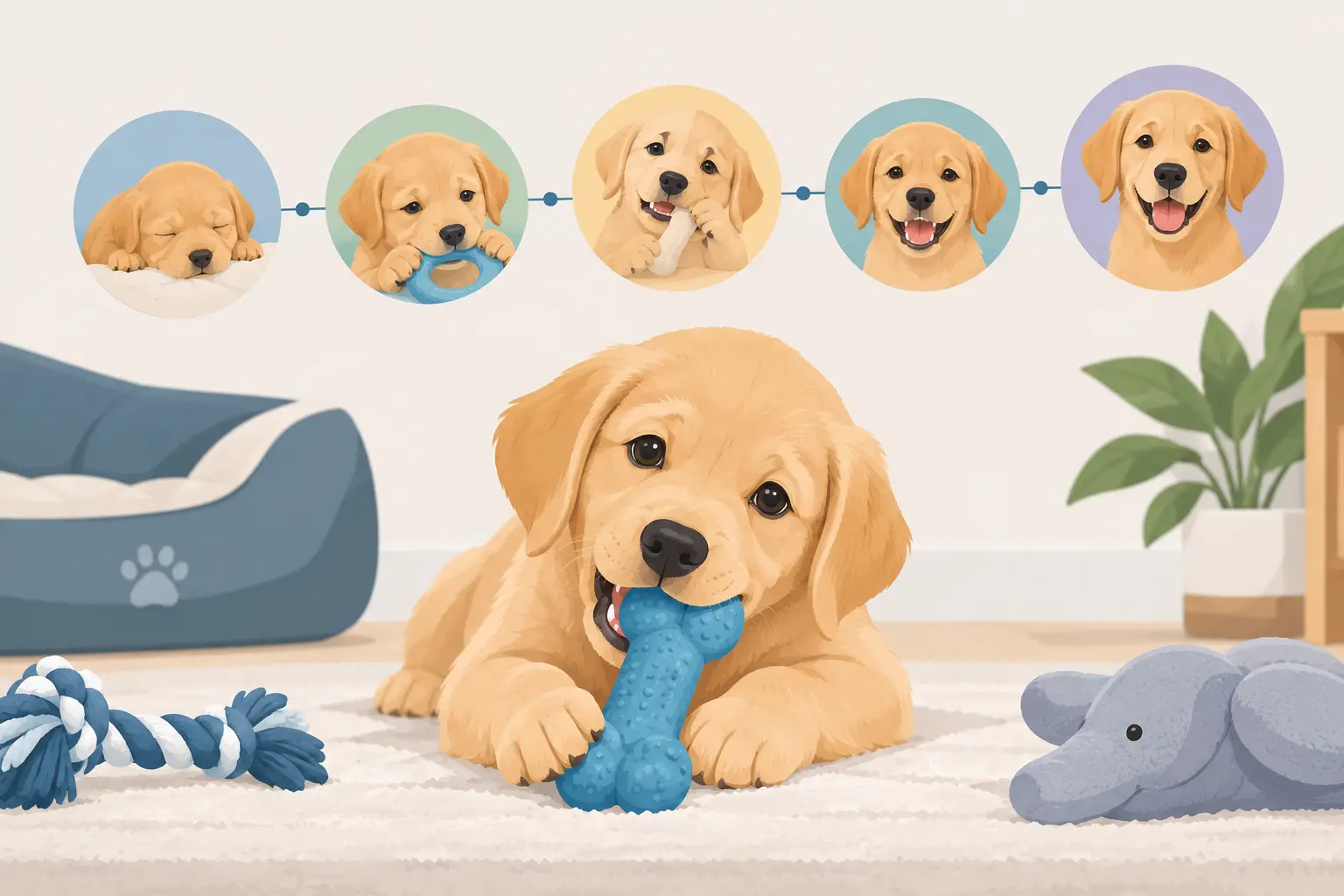
A tiny tooth on the floor can feel like a big milestone - and it is. Your puppy's mouth is changing quickly, which can explain the sudden chewing, extra drool, and interest in your favorite slipper. This puppy teething timeline helps you understand what is normal, how to make your pup more comfortable, and when a quick call to the vet is the caring choice.
Puppy Teething Timeline by Age
Every puppy develops on a slightly different schedule, but most follow the same general pattern. Breed size, genetics, and individual growth can shift the timing by a few weeks. A large-breed puppy may mature a little differently from a toy-breed pup, so think of these ages as helpful guideposts rather than hard deadlines.
Birth to 2 weeks: Toothless and nursing
Newborn puppies have no visible teeth. They rely completely on their mother for milk and spend most of their time sleeping and growing. There is no teething care needed from a pet parent at this stage, but those first weeks set the foundation for healthy development.
3 to 6 weeks: Baby teeth appear
A puppy's first teeth, also called deciduous or milk teeth, usually begin erupting at about 3 weeks old. The front incisors generally arrive first, followed by canine teeth and premolars. By around 6 to 8 weeks, most puppies have a full set of 28 baby teeth.
These little teeth are sharp. Very sharp. If you have ever been greeted by an enthusiastic puppy nibble, you know exactly why this stage gets attention. Puppies also begin exploring the world with their mouths, so gentle redirection and age-appropriate toys can start early.
8 to 12 weeks: Settling into a new home
Many puppies join their new families with all or nearly all of their baby teeth in place. They may still mouth hands, clothing, and household items, but this behavior is not always caused by discomfort. It is also play, curiosity, and a normal way to learn.
Now is a great time to build kind chewing habits. Keep a few puppy-safe chew options within reach and calmly swap one in whenever your puppy goes for a table leg or shoe. Avoid turning the swap into a chase game. A relaxed trade teaches your puppy that letting go of the wrong item leads to something better.
12 to 16 weeks: The real teething phase begins
At roughly 3 to 4 months old, baby teeth start loosening and falling out as adult teeth push through. You may find a tiny tooth in a blanket or on the floor. More often, puppies swallow the teeth without any problem, so do not worry if you never find one.
This is often when chewing ramps up. Your puppy may seem more interested in furniture, crate edges, rugs, and hands because chewing offers pressure and relief to sore gums. Mild gum redness, a little drool, and brief bad breath can happen during this stage. A small spot of blood on a chew toy can also be normal if it is occasional and minor.
4 to 6 months: Adult teeth keep coming
The adult incisors usually arrive first, followed by canines and premolars. The canine teeth, those noticeable fangs, can make this stage look especially dramatic. Your puppy may have a mix of baby and adult teeth for a while.
Be patient if your pup has a few crankier days. Teething discomfort can affect sleep, focus, and willingness to settle. That does not mean training needs to stop. It simply means shorter sessions, more rest, and an easier win can be kinder and more productive.
5 to 7 months: The adult set is nearly complete
Most puppies have their 42 permanent adult teeth by 6 or 7 months of age. Molars, which do not have baby-tooth versions, come in toward the end of the process. Once those adult teeth are established, your puppy may still enjoy chewing, but the intense teething urge usually fades.
At this point, a quick look in your puppy's mouth during a routine vet visit is wise. Your veterinarian can check that the bite is developing normally and confirm that no baby teeth are hanging around where they should not be.
Signs Your Puppy Is Teething
Chewing is the headline symptom, but it is not the only one. Puppies can drool more than usual, paw at their mouths, chew more slowly, or prefer softer food for a day or two. You might also notice a loose tooth, mild gum swelling, or a little extra fussiness.
The key word is mild. Teething can be uncomfortable, but it should not make a puppy truly sick. A puppy who is bright, eating, drinking, and playing is usually working through a normal stage of growth, even if your coffee table is suddenly very interesting.
It is also worth separating teething from normal puppy behavior. A 5-month-old who chews a sandal while you answer an email may be soothing sore gums, but they are also being a puppy who found a rewarding object. Management matters as much as relief. Put tempting items away, use gates or a puppy-safe room when supervision is limited, and offer approved chews before boredom turns into mischief.
Making Teething More Comfortable
A comfortable puppy needs safe ways to chew. Choose toys designed for puppies and match them to your dog's size and chewing style. A chew should be large enough that it cannot be swallowed and durable enough that your puppy cannot quickly tear off chunks.
Chilled can feel soothing on tender gums. A puppy-safe rubber toy can be cooled in the refrigerator, or a clean damp washcloth can be twisted, chilled, and offered only while you supervise. Cold is helpful; frozen-solid objects can be too hard on developing teeth and gums.
Skip cooked bones, antlers, very hard nylon chews, ice cubes, and anything hard enough that you cannot make a slight mark in it with your fingernail. These items can crack teeth or splinter. Soft plush toys can be lovely for gentle pups, but remove them if your puppy starts pulling out stuffing or swallowing fabric.
Food-based enrichment can also help, as long as it fits your puppy's regular diet and your veterinarian's advice. A small portion of puppy food softened with water and placed in a puppy-safe rubber toy can create a calming, supervised activity. Keep portions modest so treats and enrichment do not crowd out balanced meals.
Human pain medication is never a safe shortcut. Do not give aspirin, ibuprofen, acetaminophen, numbing gels, or other over-the-counter remedies unless your veterinarian has specifically directed you to do so. Some common products can be dangerous for dogs, even in small amounts.
A Note About Retained Baby Teeth
Sometimes a baby tooth does not fall out after the adult tooth starts coming in. This is called a retained deciduous tooth. It is especially common in smaller breeds, though it can happen to any puppy.
You may see what looks like two teeth occupying the same space, often near a canine tooth. Retained baby teeth can crowd the adult teeth, trap food, and affect bite development. Do not try to pull the baby tooth yourself. Your veterinarian can decide whether it needs attention, sometimes during a planned spay or neuter procedure if the timing works out.
When to Call Your Veterinarian
A little gum tenderness is expected, but some symptoms deserve professional guidance. Contact your veterinarian if you notice persistent bleeding, a strong foul odor from the mouth, facial swelling, pus, severe gum redness, or a tooth that appears broken. You should also call if your puppy refuses food or water, seems unusually lethargic, cries repeatedly when chewing, or has vomiting or diarrhea alongside mouth discomfort.
If you suspect your puppy swallowed part of a toy, fabric, bone, or other nonfood item, contact your veterinarian promptly. Teething puppies are curious, and prevention is always easier than dealing with a blockage or injury.
Building Good Dental Habits Early
Teething is a smart time to make mouth handling feel normal. When your puppy is calm, gently lift the lip for a second, offer praise, and let the experience stay easy. Over time, you can introduce a dog toothbrush and dog-safe toothpaste in tiny, positive steps.
You do not need a perfect dental routine overnight. The goal is to help your puppy learn that having their mouth checked and teeth cleaned is no big deal. That small investment can make future grooming, vet visits, and at-home dental care far less stressful.
Your puppy will outgrow the sharp little teeth, but the comfort and confidence you build now can last for years. Keep safe chews nearby, protect the things you love, and give your growing sidekick plenty of patience along with the gentle care every happy tail deserves.
