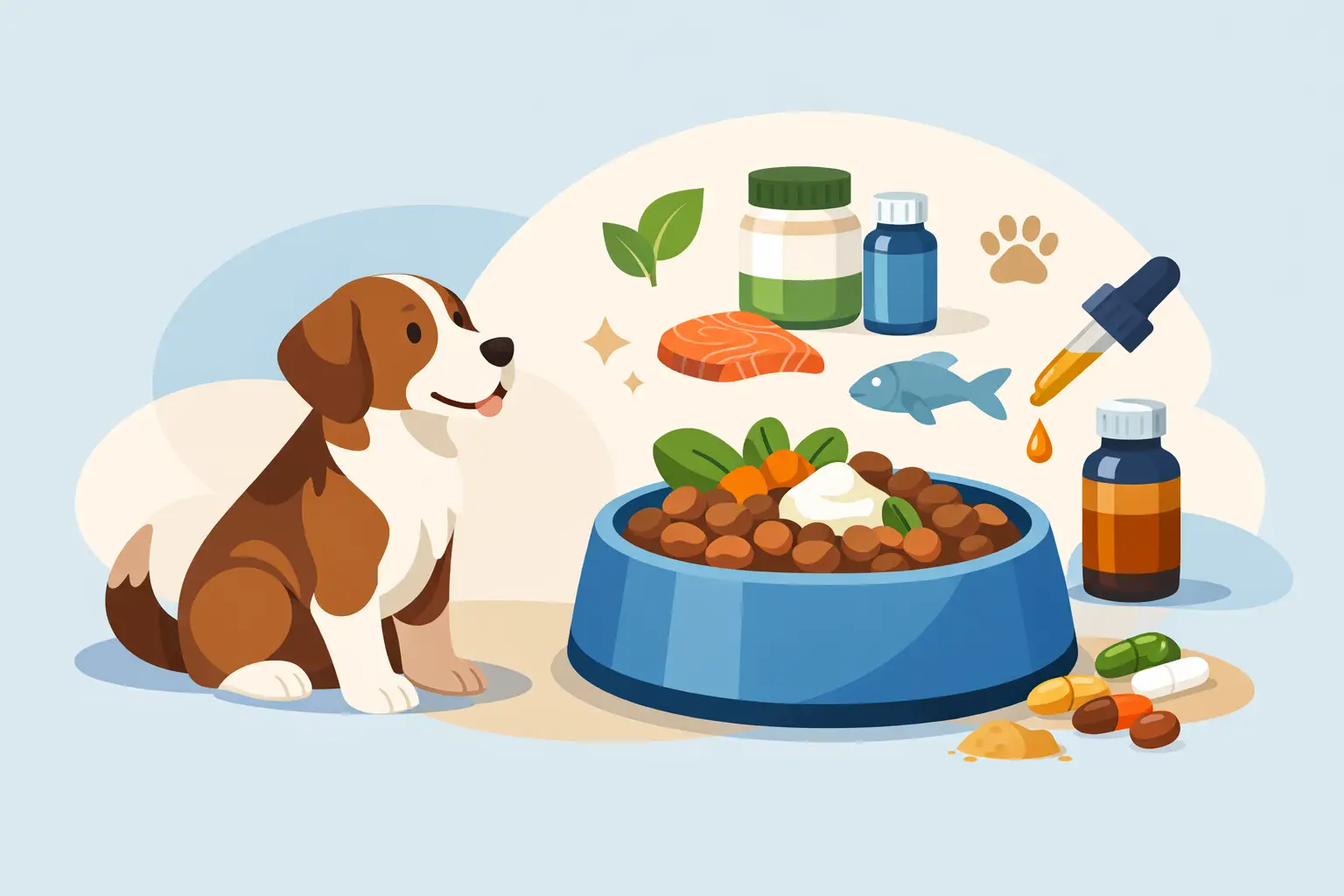
A shiny coat, comfortable walks, and enthusiastic mealtimes are the little things that make dog-parent life feel good. But when you start asking, “what supplements should I add to my dog’s food,” the options can get overwhelming fast. The honest answer is that many dogs need none at all, while others benefit from a carefully chosen supplement for a specific concern.
The best place to start is not with the cutest jar or the longest ingredient list. Start with your dog’s age, diet, lifestyle, and health history. A quality commercial dog food labeled complete and balanced is designed to provide core nutrition on its own. Supplements are there to fill a real gap or provide targeted support, not to turn every dinner bowl into a science experiment.
What Supplements Should I Add to My Dog’s Food?
If your dog is healthy, eating a complete and balanced food, and has no symptoms your veterinarian is concerned about, you may not need to add anything. That can feel less exciting than topping dinner with a colorful scoop, but it is often the right call. More is not always better, especially with vitamins and minerals that can build up or interfere with a carefully formulated diet.
Supplements make more sense when there is a clear goal. Maybe your senior dog is slower to stand after a nap. Maybe seasonal itching has left their skin looking less than fabulous. Maybe a recent round of medication has upset their stomach. Choose support based on that one need, introduce it gradually, and watch for a meaningful change.
Before adding anything new, check with your veterinarian if your dog takes medication, is pregnant or nursing, has a chronic condition, or eats a prescription diet. Puppies also need special care. Their growing bodies require precise nutrition, and extra calcium or vitamins can create problems rather than prevent them.
Supplements That May Help Common Dog Needs
Omega-3s for skin, coat, and mobility
Fish oil and other marine-based omega-3 supplements are popular for good reason. EPA and DHA, two types of omega-3 fatty acids, may support healthy skin, a soft coat, normal inflammatory responses, and joint comfort. They can be especially useful for dogs with dry skin, dull fur, or age-related stiffness.
Quality matters here. Look for a product that clearly states how much EPA and DHA it provides, rather than simply listing a large amount of “fish oil.” Ask your veterinarian about an appropriate dose for your dog’s weight. Too much oil can add unwanted calories and may cause loose stools, so start slowly and mix it into food.
Joint support for active and aging dogs
Glucosamine, chondroitin, green-lipped mussel, MSM, and undenatured type II collagen are common ingredients in joint supplements. Some dogs, especially large breeds, athletic pups, and seniors, may benefit from added support for everyday movement.
Results are not usually instant. A joint supplement may take several weeks of consistent use before you can tell whether it is helping. Look for practical changes: your dog gets up more easily, seems happier on walks, or is less hesitant around stairs. If limping, pain, or reduced mobility is sudden or worsening, skip the supplement guesswork and call your veterinarian.
Probiotics for digestive balance
A dog’s gut can get a little dramatic after travel, stress, dietary changes, or certain medications. Dog-specific probiotics may help support normal digestion and stool quality by adding beneficial microorganisms to the digestive tract.
Choose a product made for dogs that identifies the probiotic strains and provides storage directions. Some require refrigeration, while others are shelf-stable. Introduce it slowly, particularly for sensitive stomachs. If vomiting, diarrhea, blood in the stool, or a loss of appetite continues beyond a short window, your dog needs veterinary guidance, not just another scoop of powder.
Fiber for stool consistency and fullness
Plain pumpkin, psyllium, and some fiber blends can be useful in specific situations, such as occasional mild constipation or soft stools. Fiber is a balancing act, though. The right type and amount depend on whether your dog needs more moisture, more bulk, or an adjustment to their overall food.
Use a dog-appropriate product or get your veterinarian’s recommendation before making fiber a daily routine. Too much can cause gas, bloating, or the opposite bathroom issue from the one you hoped to solve. Always make sure fresh water is available.
Dental support for fresher kisses
Dental chews, water additives, and oral-health powders can complement brushing and professional veterinary care. Some products help reduce plaque buildup or support a fresher-smelling mouth, but they do not replace brushing or address painful dental disease.
If your dog has persistent bad breath, drooling, pawing at the mouth, bleeding gums, or trouble eating, schedule a dental check. Those signs call for more than a minty additive.
Match the Supplement to Your Dog, Not the Trend
It is tempting to buy a multivitamin “just in case,” particularly when you want to give your best friend every possible advantage. Yet a broad multivitamin is often unnecessary for dogs eating a complete commercial diet. In some cases, extra vitamin D, calcium, iron, or vitamin A can be harmful.
Home-cooked and raw diets are different. Those diets can be wonderful for some families, but they must be balanced with care. If you prepare your dog’s food at home, work with a veterinary nutrition professional to identify exactly what should be added. Randomly combining human vitamins, powders, and pantry ingredients is not a safe substitute for a complete recipe.
Also consider your dog’s everyday life. A young dog who hikes every weekend may have different joint needs than a tiny couch-loving adult in a sweater collection. A dog with itchy skin may need a different approach than a dog with anxiety-related digestive trouble. The most thoughtful choice is usually the most specific one.
How to Choose a Safer Supplement
The supplement aisle is full of bold promises, so a few simple checks can protect your pup and your wallet. Look for a label with a complete ingredient list, clear directions by body weight, a lot or batch number, and a manufacturer you can contact. Be cautious with products that promise to cure disease, work overnight, or use vague “proprietary blends” without telling you how much of each ingredient is included.
A quality product should be formulated for dogs, not borrowed from your own medicine cabinet. Human supplements may contain unsafe doses or ingredients that are dangerous for dogs, including xylitol in some chewables and powders. Keep gummies, capsules, and flavored supplements stored securely, just as you would medications.
When possible, choose brands that use independent quality testing or follow recognized pet supplement quality standards. Your veterinarian can also help you compare labels and determine whether a supplement makes sense alongside your dog’s food and medications.
Introduce One Change at a Time
Even a gentle supplement can upset a sensitive stomach if it arrives all at once. Start with the lowest suggested amount, mix it into a familiar meal, and increase gradually if the label and your veterinarian recommend it. Keep the rest of your dog’s routine steady for a week or two.
Adding one product at a time makes it easier to spot what is helping and what is not. Notice appetite, energy, scratching, stool quality, mobility, and behavior. A quick note on your phone can be more useful than relying on memory after several busy weeks.
Stop the supplement and contact your veterinarian if you notice facial swelling, hives, repeated vomiting, severe diarrhea, unusual lethargy, or any change that worries you. Gentle care means listening when your dog’s body says no.
A Little Care Goes a Long Way
The right supplement can be a lovely addition to a healthy routine, alongside nourishing food, fresh water, daily movement, grooming, rest, and plenty of affection. At Sootha Paws, we believe happy tails deserve both practical care and a little everyday joy.
Start with one clear goal, choose thoughtfully, and give it time. Your dog may not care what the label says, but they will absolutely appreciate feeling comfortable enough for a sunny nap, a favorite walk, and one more treat-worthy moment with you.
